


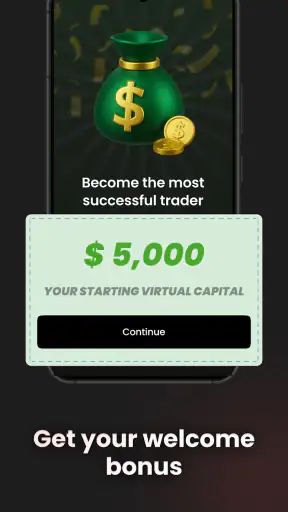
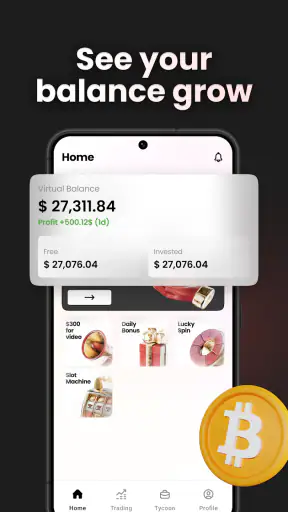
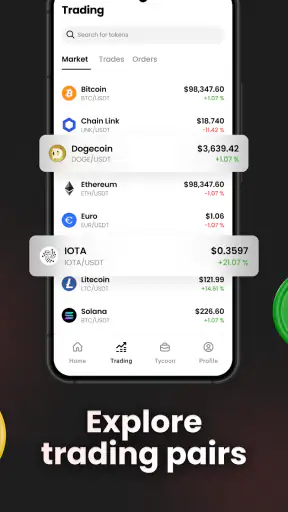
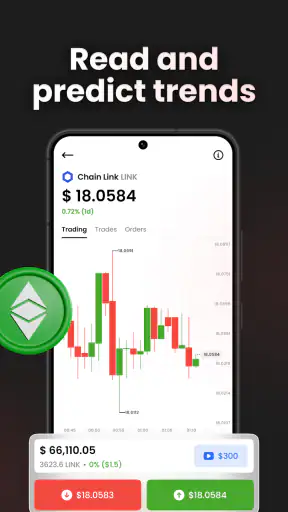

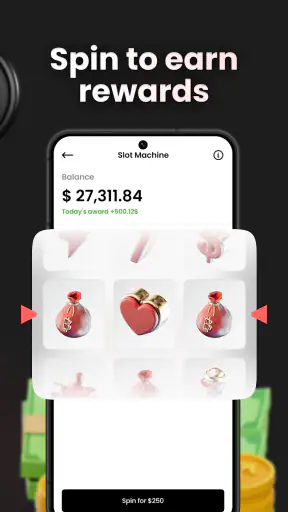
Learning to trade is easy to approach badly. Real markets punish rushed decisions, while ordinary charts can make a beginner feel as if every unfamiliar line is a test they are already failing. I found CryptoRush: Crypto Simulator more useful as a practice room than as a shortcut to becoming a trader. It is a free business app from CryptoRush - Trading Academy, built around a simulated market environment where I could work on decisions without putting actual funds at risk.
That distinction matters. CryptoRush is a training tool, not a replacement for a real exchange, financial advice, or a guaranteed route to profit. Its best value comes from giving a new user a place to slow down, observe a market-style situation, and think through an action before treating trading as a source of income. I would recommend it to someone who wants to rehearse the mental side of trading, but I would not present it as sufficient preparation on its own.
What I would look for before choosing a trading simulator
My first decision criterion is whether an app encourages deliberate practice instead of impulsive clicking. A simulator is only helpful if it makes me consider why I would enter, wait, or leave a position. The presence of a market-like setting is not enough; the real question is whether I can turn each session into a learning exercise rather than simply chasing a satisfying result.
The second criterion is risk separation. CryptoRush uses simulation rather than asking me to commit real money, which makes it suitable for exploring basic trading habits with less financial pressure. That does not make every simulated success meaningful. A result achieved without emotional exposure can feel very different from a decision made when money is genuinely at stake, so I treat the app as a controlled rehearsal rather than proof of readiness.
I also consider how well an app fits into a repeatable routine. A useful practice tool should work for short sessions, not only for someone who can spend a whole evening studying charts. I found the idea most practical when I approached it with one narrow goal: observing a setup, testing an entry idea, or reviewing whether I acted too quickly. That approach is more productive than opening the app without a question in mind.
Finally, I would ask what kind of learner is using it. A complete beginner may need explanations of terminology, market mechanics, and risk management before simulation feels meaningful. A more experienced trader may want detailed charting, extensive market data, or a direct connection to a live account. CryptoRush sits more naturally between those extremes: it is aimed at developing trading skills through practice, rather than replacing a full research and execution platform.
A gentle starting point for people who are not ready to trade live
The strongest reason to try CryptoRush: Crypto Simulator is the psychological distance it creates from real financial consequences. When I am learning, that distance lets me focus on process. I can ask whether I entered because the situation made sense or because I felt I was missing an opportunity. I can notice whether I tend to hold on too long after a decision stops working. Those observations are valuable because many beginner mistakes are behavioral rather than technical.
A realistic everyday use case would be a short practice session during a commute or after work. Instead of trying to “make money” in the simulation, I might choose one rule for the session, such as waiting for a clear reason before acting. Afterward, I would write down what I expected and what actually happened. The important insight is that the app becomes more useful when paired with a simple journal. Without that extra step, a simulated win can teach overconfidence, while a simulated loss can feel like bad luck.
I also like the app’s potential as a low-pressure introduction for someone who has only watched trading videos or read social media posts. Those sources often compress complicated decisions into dramatic claims. A simulator gives the learner a chance to discover that entries, exits, patience, and uncertainty are connected. It does not remove confusion immediately, but it can turn abstract vocabulary into decisions that feel easier to examine.
Its free price lowers the barrier to trying that approach. The app has reached over five million installs and carries a 4.6 average from around 157 thousand ratings, so it has attracted a substantial audience. I would treat that popularity as a reason to investigate, not as evidence that it will suit every learning style. A large user base cannot tell me whether the app’s simulated experience matches my own goals.
Three ways I would get more value from it
My first practical tip is to separate observation from action. During one session, I would spend time watching the simulated market before making a decision, then compare the eventual outcome with my original reasoning. This exposes a habit that is easy to miss when every session is judged only by profit or loss: sometimes the process was sensible even when the outcome was unfavorable, and sometimes a lucky result came from a poor decision.
My second tip is to change only one behavior at a time. If I try to improve timing, patience, risk awareness, and market interpretation simultaneously, I will not know what helped. A focused routine makes the simulator more like a practice lab. For example, I could use several sessions to test whether waiting for confirmation improves my discipline, then move to reviewing exits. This is a more advanced use than simply tapping through simulated trades, because it turns repetition into an experiment.
My third insight is that simulation can hide emotional risk. I may be comfortable holding a losing position when no real money is involved, yet react very differently with actual savings. For that reason, I would use CryptoRush to identify habits, not to estimate how I will feel in a live market. Anyone moving beyond practice should keep the distinction visible and avoid treating simulated confidence as permission to take large real-world risks.
Where the app is more convincing than the usual alternatives
Compared with jumping directly into a live crypto exchange, CryptoRush offers a safer first step. A live platform may provide access to actual assets and orders, but that access also makes mistakes expensive. For a person who is still learning what a trading decision involves, a simulated environment is the better category of tool. It lets the learner concentrate on reasoning before adding financial consequences.
Compared with watching educational videos, the app offers a more active form of learning. A video can explain a concept clearly, but it cannot make me confront my own impatience. CryptoRush is more useful when I already understand a basic idea and want to see how I respond while making a decision. The trade-off is that passive learning can be better for building foundational knowledge, so I would use lessons and reading alongside the simulator rather than expecting the app to explain everything.
Compared with a spreadsheet or handwritten trading journal, CryptoRush provides a more immediate practice setting. A journal is excellent for reviewing decisions, but it does not create the same feeling of responding to a changing market-style situation. I would combine both: use the app for rehearsal and the journal for accountability. The spreadsheet remains the stronger choice for someone who wants to analyze personal records in detail, while CryptoRush is easier to approach when the main obstacle is getting started.
Compared with full-featured charting and brokerage platforms, the app is likely to appeal more to learners than to advanced users. A professional workflow may require deeper analysis, live information, order tools, and portfolio management. I would not switch away from those tools if I already depended on them for serious research. CryptoRush makes more sense before that stage, or as a separate practice space when I want to isolate decision-making from the complexity of a live account.
Limitations I would consider before installing
The biggest limitation is the gap between simulated and real trading. A practice result cannot demonstrate that I can manage fear, greed, or financial loss. It also cannot guarantee that an approach will work outside the app. This is not a flaw unique to CryptoRush, but it is important enough to shape how I use it. The app is valuable precisely when I keep its boundaries in mind.
Another possible source of friction is the need for self-direction. Someone expecting a complete course with a carefully ordered curriculum may find a simulator less satisfying than a dedicated education platform. I would want to know what I am practicing and why. If I open it without a plan, I risk turning the experience into repeated guessing, which may reinforce habits I am trying to avoid.
The Mature 17+ content rating is also relevant for families and younger learners. I would not assume that a teenager can use a trading simulator responsibly simply because no real funds are being committed. Financial themes can encourage unrealistic expectations, especially when online discussions present crypto trading as quick income. Adults introducing the app to a younger user should discuss risk, uncertainty, and the difference between practice and investing.
The app is free, but “free” should not be confused with cost-free learning. The real investment is time and attention. If I spend many sessions repeating actions without reviewing them, I may gain familiarity without gaining skill. I would rather use a shorter, focused routine than leave the app running as background entertainment.
Who should stay with it and who should choose something else
I think CryptoRush is a good fit for a beginner who wants to understand the rhythm of trading before opening a live account. It also suits a cautious learner who knows that impulsive decisions are a personal weakness and wants a place to practice waiting. Someone returning to trading after a long break could use it to rebuild a routine without immediately exposing funds.
I would be more hesitant to recommend it as the main tool for an experienced trader. If the goal is sophisticated market analysis, portfolio tracking, or live execution, a dedicated platform is likely a better match. The same applies to someone who primarily wants structured financial education. A course, book, or guided learning program may provide clearer explanations, while this app can serve as the hands-on part afterward.
I would also advise skipping it if the real goal is fast profit. A simulator may feel exciting, but that excitement is not a reliable investment strategy. Anyone uncomfortable with uncertainty, unwilling to review mistakes, or looking for guaranteed signals should not treat the app as an answer. CryptoRush can help me practice decisions; it cannot remove the uncertainty that makes trading difficult.
What switching to it would actually involve
Moving from videos or articles to CryptoRush is a small practical change, but it requires a different attitude. Instead of collecting more explanations, I have to make choices and accept that the results may challenge my assumptions. I would begin with a simple notebook, define one learning objective, and review each session. That workflow makes the transition worthwhile because it connects theory with behavior.
Moving from a live exchange to the simulator is more complicated emotionally. The reduction in financial pressure is helpful, but the experience may feel less urgent. I would use that difference deliberately: practice the rules I want to follow, identify the situations that tempt me to break them, and only consider live activity separately and cautiously. I would not move real money merely because the simulated results look encouraging.
Moving from a spreadsheet to the app offers more immediacy but less personal control over how I record information. The best choice depends on the question I am trying to answer. If I want to test my patience in a market-style setting, CryptoRush is the more natural tool. If I want to calculate performance across a long personal history, a spreadsheet remains more flexible. Using both may be more effective than forcing one to do the other’s job.
The developer, CryptoRush - Trading Academy, positions the product around skill development rather than presenting it as a general finance utility. That focus helps define the app’s role. I would approach it as a practice companion, not as a complete financial workspace. Its current version, 1.9.4, works for readers using Android 8.0 or later, which makes it accessible to many existing devices without requiring a recent operating system.
My recommendation after weighing the trade-offs
My recommendation is positive, with a clear condition: use CryptoRush as a structured simulator, not as a prediction machine. Its free access, approachable purpose, and simulated setting make it a sensible starting point for someone who wants to rehearse trading decisions before considering real money. The app is especially worthwhile when each session has a defined objective and ends with a short review.
I would not choose it alone for advanced analysis, formal education, or live portfolio management. In those cases, a charting platform, a learning resource, or a regulated exchange may fit the job better. The strongest setup is complementary: learn the concepts elsewhere, practice decisions in CryptoRush, record what happened, and keep real investing separate from the confidence gained in simulation.
Its audience size is notable, with more than five million installs, and the app is available at no purchase price. Those details make experimentation easy, while the 17-and-over rating reminds me that the subject is not harmless entertainment. I would encourage a new user to begin slowly, avoid interpreting simulated success as financial skill, and pay more attention to decision quality than to the final result.
In the end, I see CryptoRush as a useful first rehearsal for crypto trading, especially for people who are curious but not ready to risk money. It wins by lowering the cost of making beginner mistakes and giving those mistakes a place to examine. It falls short when a user expects complete education, professional tools, or a path to guaranteed returns. If you want a practical, low-pressure way to test your habits, I think it is worth trying; if you want live execution or expert-level analysis, I would look beyond it.


